Early Learning Rankings: How Preschoolers in Each State Stack Up in Math and Literacy
Early Learning Rankings: How Preschoolers in Each State Stack Up in Math and Literacy
Early Learning Rankings: How Preschoolers in Each State Stack Up in Math and Literacy
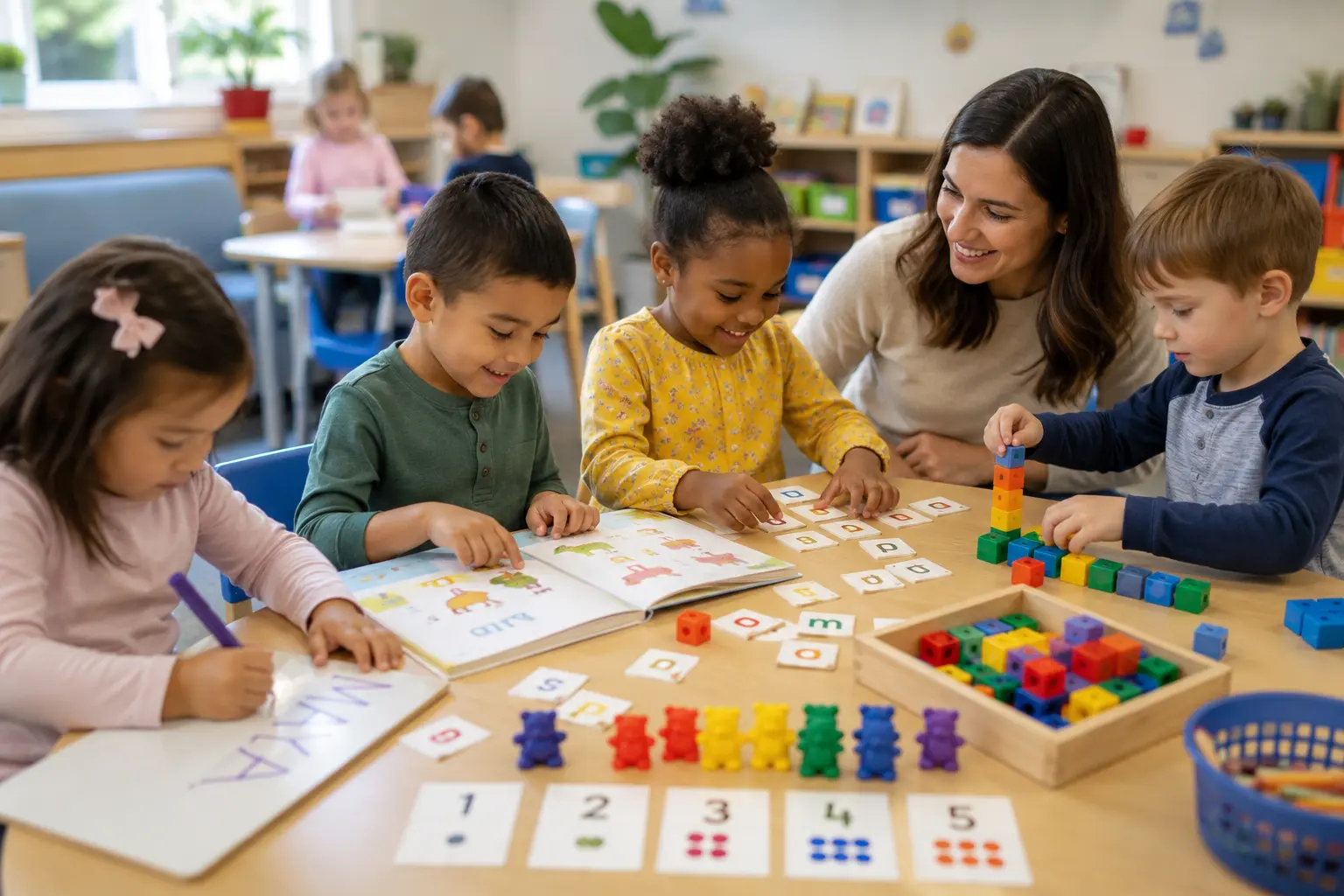
Early childhood education lays the critical foundation for lifelong learning. Between ages three and five, children build the basic academic skills across literacy, math, and verbal reasoning that directly shape kindergarten readiness and future success. In part because each state sets its own licensing requirements and quality standards rather than following a single national curriculum, these early academic outcomes vary widely across the country. Understanding such differences can help directors and teachers pinpoint curriculum strengths as well as targeted areas for potential improvement.
To help provide that clarity, Playground analyzed 2024 data from the National Survey of Children’s Health to determine where states on key early academic skills. Explore the results for your state below.
Want to streamline your daily operations to focus more on what matters? Book a free demo with Playground to learn more.
Key Findings
Preschoolers in Connecticut are most advanced in early academics. Across domains, children aged three to five rank the best in literacy and math skills in Connecticut. These children score best in recognizing the beginning sounds of words with 66.2% consistency, as well as being able to do simple addition with 45% competent in this skill. Children in this state also rank a close second (after Georgia) for being able to read single-digit numbers at 66.6%.
Despite ranking in the top 10, Maine preschoolers are behind in simple addition. Maine ranks first in young children’s ability to generate rhyming words when prompted, and also perform particularly strongly when asked to identify single-digit numbers. The state generally ranks among the top third in most metrics, but has a prominent weakness when it comes to basic addition, with only 16.9% of these children able to perform consistently in this category.
Washington’s youth can spell their own name at the highest rate. More than half (56.1%) of three- to five-year-olds in Washington can reliably spell their own name, the highest rate in the country. Only seven states total clear the 50% mark on this metric, including Illinois, Alaska, Alabama, Massachusetts, Texas, and Connecticut. Washington children also rank especially high in recognizing single-digit numbers and counting 30 or more objects, helping the state place fourth overall for basic academic skills.
Massachusetts preschoolers have the best grasp on the alphabet. 57.8% of young children are able to recognize every letter of the alphabet in Massachusetts, more than in any other state. Georgia (55.0%); Maryland (52.2%); and Mississippi (52.2%) also perform well in this metric, while young children in South Dakota (27.0%); Kentucky (28.7%); and North Dakota (29.9%) have the weakest grasp on the alphabet.
Preschoolers in the Dakotas rank last in early academic skills. North Dakota finishes 50th and South Dakota 49th overall. In both states, fewer than 30% of three- to five-year-olds can reliably recognize every letter of the alphabet, count to 30 or higher, or generate rhyming words “very well.” Simple addition is especially weak, with just 15.8% of North Dakota preschoolers and 21.4% of those in South Dakota able to do it consistently. Even on stronger metrics for the region, such as reading single-digit numbers, performance remains well below the national leaders.
Early childhood academics by state
States are ranked based on the reliable competency of three- to five-year olds across several domains in basic mathematics, reading, and verbal reasoning skills.
Connecticut
Recognizes starting sound of words: 66.2%
Thinks of words with the same starting sound: 54.3%
Can write their first name: 52.0%
Reads single-digit numbers: 66.6%
Does simple addition: 45.0%
Identifies set with more objects: 54.0%
Can count at least 30 objects: 46.1%
Can recognize all letters of the alphabet: 47.7%
Generates rhyming words very well: 31.5%
Georgia
Recognizes starting sound of words: 52.5%
Thinks of words with the same starting sound: 53.1%
Can write their first name: 49.0%
Reads single-digit numbers: 66.7%
Does simple addition: 32.6%
Identifies set with more objects: 51.7%
Can count at least 30 objects: 44.6%
Can recognize all letters of the alphabet: 55.0%
Generates rhyming words very well: 32.4%
Massachusetts
Recognizes starting sound of words: 52.6%
Thinks of words with the same starting sound: 40.7%
Can write their first name: 53.1%
Reads single-digit numbers: 59.2%
Does simple addition: 25.3%
Identifies set with more objects: 54.5%
Can count at least 30 objects: 46.2%
Can recognize all letters of the alphabet: 57.8%
Generates rhyming words very well: 32.9%
Washington
Recognizes starting sound of words: 46.7%
Thinks of words with the same starting sound: 40.6%
Can write their first name: 56.1%
Reads single-digit numbers: 66.1%
Does simple addition: 23.0%
Identifies set with more objects: 59.5%
Can count at least 30 objects: 44.9%
Can recognize all letters of the alphabet: 45.0%
Generates rhyming words very well: 35.9%
New Jersey
Recognizes starting sound of words: 58.3%
Thinks of words with the same starting sound: 56.0%
Can write their first name: 48.3%
Reads single-digit numbers: 60.5%
Does simple addition: 30.8%
Identifies set with more objects: 52.2%
Can count at least 30 objects: 43.6%
Can recognize all letters of the alphabet: 47.8%
Generates rhyming words very well: 26.5%
Rhode Island
Recognizes starting sound of words: 49.3%
Thinks of words with the same starting sound: 46.8%
Can write their first name: 48.7%
Reads single-digit numbers: 61.3%
Does simple addition: 27.2%
Identifies set with more objects: 61.6%
Can count at least 30 objects: 42.6%
Can recognize all letters of the alphabet: 47.0%
Generates rhyming words very well: 32.1%
Illinois
Recognizes starting sound of words: 44.0%
Thinks of words with the same starting sound: 42.1%
Can write their first name: 54.1%
Reads single-digit numbers: 58.6%
Does simple addition: 28.2%
Identifies set with more objects: 52.8%
Can count at least 30 objects: 43.3%
Can recognize all letters of the alphabet: 48.1%
Generates rhyming words very well: 35.1%
Alaska
Recognizes starting sound of words: 43.8%
Thinks of words with the same starting sound: 49.0%
Can write their first name: 54.1%
Reads single-digit numbers: 60.5%
Does simple addition: 23.4%
Identifies set with more objects: 52.5%
Can count at least 30 objects: 33.3%
Can recognize all letters of the alphabet: 50.8%
Generates rhyming words very well: 33.0%
Maine
Recognizes starting sound of words: 50.1%
Thinks of words with the same starting sound: 46.1%
Can write their first name: 46.5%
Reads single-digit numbers: 65.7%
Does simple addition: 16.9%
Identifies set with more objects: 49.6%
Can count at least 30 objects: 32.5%
Can recognize all letters of the alphabet: 51.7%
Generates rhyming words very well: 37.9%
Mississippi
Recognizes starting sound of words: 49.7%
Thinks of words with the same starting sound: 37.9%
Can write their first name: 47.6%
Reads single-digit numbers: 58.4%
Does simple addition: 27.7%
Identifies set with more objects: 52.1%
Can count at least 30 objects: 30.6%
Can recognize all letters of the alphabet: 52.2%
Generates rhyming words very well: 34.2%
Nevada
Recognizes starting sound of words: 49.7%
Thinks of words with the same starting sound: 41.8%
Can write their first name: 38.2%
Reads single-digit numbers: 63.1%
Does simple addition: 29.0%
Identifies set with more objects: 50.8%
Can count at least 30 objects: 39.9%
Can recognize all letters of the alphabet: 51.8%
Generates rhyming words very well: 26.5%
Louisiana
Recognizes starting sound of words: 46.0%
Thinks of words with the same starting sound: 41.0%
Can write their first name: 48.1%
Reads single-digit numbers: 56.5%
Does simple addition: 29.3%
Identifies set with more objects: 51.5%
Can count at least 30 objects: 34.5%
Can recognize all letters of the alphabet: 50.1%
Generates rhyming words very well: 29.5%
New Hampshire
Recognizes starting sound of words: 48.4%
Thinks of words with the same starting sound: 42.3%
Can write their first name: 48.3%
Reads single-digit numbers: 59.2%
Does simple addition: 23.3%
Identifies set with more objects: 51.5%
Can count at least 30 objects: 37.6%
Can recognize all letters of the alphabet: 40.9%
Generates rhyming words very well: 32.3%
Nebraska
Recognizes starting sound of words: 45.5%
Thinks of words with the same starting sound: 43.0%
Can write their first name: 41.6%
Reads single-digit numbers: 66.2%
Does simple addition: 23.4%
Identifies set with more objects: 60.8%
Can count at least 30 objects: 27.7%
Can recognize all letters of the alphabet: 45.5%
Generates rhyming words very well: 30.3%
Texas
Recognizes starting sound of words: 57.0%
Thinks of words with the same starting sound: 33.7%
Can write their first name: 52.2%
Reads single-digit numbers: 59.3%
Does simple addition: 30.1%
Identifies set with more objects: 46.9%
Can count at least 30 objects: 34.9%
Can recognize all letters of the alphabet: 45.2%
Generates rhyming words very well: 25.8%
Oklahoma
Recognizes starting sound of words: 46.2%
Thinks of words with the same starting sound: 45.4%
Can write their first name: 48.0%
Reads single-digit numbers: 56.2%
Does simple addition: 24.3%
Identifies set with more objects: 58.1%
Can count at least 30 objects: 32.2%
Can recognize all letters of the alphabet: 44.3%
Generates rhyming words very well: 25.7%
Alabama
Recognizes starting sound of words: 51.6%
Thinks of words with the same starting sound: 42.8%
Can write their first name: 53.4%
Reads single-digit numbers: 55.9%
Does simple addition: 23.1%
Identifies set with more objects: 43.6%
Can count at least 30 objects: 42.2%
Can recognize all letters of the alphabet: 43.4%
Generates rhyming words very well: 24.2%
Arizona
Recognizes starting sound of words: 49.0%
Thinks of words with the same starting sound: 43.4%
Can write their first name: 49.8%
Reads single-digit numbers: 57.4%
Does simple addition: 20.2%
Identifies set with more objects: 47.2%
Can count at least 30 objects: 35.5%
Can recognize all letters of the alphabet: 47.0%
Generates rhyming words very well: 29.4%
Colorado
Recognizes starting sound of words: 47.6%
Thinks of words with the same starting sound: 46.8%
Can write their first name: 49.9%
Reads single-digit numbers: 53.9%
Does simple addition: 21.8%
Identifies set with more objects: 45.3%
Can count at least 30 objects: 38.5%
Can recognize all letters of the alphabet: 37.8%
Generates rhyming words very well: 29.1%
Florida
Recognizes starting sound of words: 49.9%
Thinks of words with the same starting sound: 46.3%
Can write their first name: 34.9%
Reads single-digit numbers: 63.7%
Does simple addition: 35.3%
Identifies set with more objects: 49.1%
Can count at least 30 objects: 28.4%
Can recognize all letters of the alphabet: 39.1%
Generates rhyming words very well: 25.9%
Wisconsin
Recognizes starting sound of words: 45.7%
Thinks of words with the same starting sound: 42.4%
Can write their first name: 46.9%
Reads single-digit numbers: 52.8%
Does simple addition: 23.5%
Identifies set with more objects: 51.1%
Can count at least 30 objects: 32.0%
Can recognize all letters of the alphabet: 44.3%
Generates rhyming words very well: 25.3%
Maryland
Recognizes starting sound of words: 46.8%
Thinks of words with the same starting sound: 40.8%
Can write their first name: 42.1%
Reads single-digit numbers: 64.2%
Does simple addition: 16.6%
Identifies set with more objects: 44.5%
Can count at least 30 objects: 31.7%
Can recognize all letters of the alphabet: 52.2%
Generates rhyming words very well: 24.3%
California
Recognizes starting sound of words: 43.4%
Thinks of words with the same starting sound: 40.9%
Can write their first name: 44.0%
Reads single-digit numbers: 58.7%
Does simple addition: 25.8%
Identifies set with more objects: 47.2%
Can count at least 30 objects: 32.7%
Can recognize all letters of the alphabet: 42.9%
Generates rhyming words very well: 25.0%
Delaware
Recognizes starting sound of words: 41.0%
Thinks of words with the same starting sound: 37.4%
Can write their first name: 42.8%
Reads single-digit numbers: 66.6%
Does simple addition: 21.5%
Identifies set with more objects: 40.8%
Can count at least 30 objects: 29.9%
Can recognize all letters of the alphabet: 47.1%
Generates rhyming words very well: 28.4%
New York
Recognizes starting sound of words: 45.9%
Thinks of words with the same starting sound: 47.8%
Can write their first name: 38.6%
Reads single-digit numbers: 51.0%
Does simple addition: 20.9%
Identifies set with more objects: 41.1%
Can count at least 30 objects: 30.8%
Can recognize all letters of the alphabet: 47.9%
Generates rhyming words very well: 26.7%
Pennsylvania
Recognizes starting sound of words: 41.1%
Thinks of words with the same starting sound: 39.6%
Can write their first name: 43.2%
Reads single-digit numbers: 57.0%
Does simple addition: 17.3%
Identifies set with more objects: 50.5%
Can count at least 30 objects: 31.7%
Can recognize all letters of the alphabet: 41.8%
Generates rhyming words very well: 24.4%
Tennessee
Recognizes starting sound of words: 39.4%
Thinks of words with the same starting sound: 40.8%
Can write their first name: 46.4%
Reads single-digit numbers: 44.7%
Does simple addition: 22.4%
Identifies set with more objects: 50.1%
Can count at least 30 objects: 35.4%
Can recognize all letters of the alphabet: 43.6%
Generates rhyming words very well: 22.7%
Utah
Recognizes starting sound of words: 42.7%
Thinks of words with the same starting sound: 35.6%
Can write their first name: 45.0%
Reads single-digit numbers: 50.3%
Does simple addition: 18.9%
Identifies set with more objects: 49.0%
Can count at least 30 objects: 33.8%
Can recognize all letters of the alphabet: 39.9%
Generates rhyming words very well: 26.7%
Oregon
Recognizes starting sound of words: 47.0%
Thinks of words with the same starting sound: 48.9%
Can write their first name: 33.9%
Reads single-digit numbers: 51.4%
Does simple addition: 25.9%
Identifies set with more objects: 51.9%
Can count at least 30 objects: 28.5%
Can recognize all letters of the alphabet: 32.6%
Generates rhyming words very well: 25.5%
Virginia
Recognizes starting sound of words: 46.3%
Thinks of words with the same starting sound: 40.0%
Can write their first name: 40.9%
Reads single-digit numbers: 47.4%
Does simple addition: 24.9%
Identifies set with more objects: 51.2%
Can count at least 30 objects: 23.5%
Can recognize all letters of the alphabet: 48.5%
Generates rhyming words very well: 23.9%
Hawaii
Recognizes starting sound of words: 49.4%
Thinks of words with the same starting sound: 37.8%
Can write their first name: 45.1%
Reads single-digit numbers: 49.7%
Does simple addition: 15.6%
Identifies set with more objects: 48.0%
Can count at least 30 objects: 40.2%
Can recognize all letters of the alphabet: 38.5%
Generates rhyming words very well: 18.5%
Ohio
Recognizes starting sound of words: 42.3%
Thinks of words with the same starting sound: 39.1%
Can write their first name: 41.0%
Reads single-digit numbers: 53.3%
Does simple addition: 19.0%
Identifies set with more objects: 44.8%
Can count at least 30 objects: 33.2%
Can recognize all letters of the alphabet: 41.4%
Generates rhyming words very well: 23.5%
Kansas
Recognizes starting sound of words: 39.6%
Thinks of words with the same starting sound: 35.2%
Can write their first name: 37.4%
Reads single-digit numbers: 54.9%
Does simple addition: 19.9%
Identifies set with more objects: 53.2%
Can count at least 30 objects: 29.4%
Can recognize all letters of the alphabet: 41.2%
Generates rhyming words very well: 24.0%
Montana
Recognizes starting sound of words: 39.7%
Thinks of words with the same starting sound: 35.9%
Can write their first name: 48.7%
Reads single-digit numbers: 47.5%
Does simple addition: 12.9%
Identifies set with more objects: 52.0%
Can count at least 30 objects: 27.7%
Can recognize all letters of the alphabet: 39.1%
Generates rhyming words very well: 24.3%
South Carolina
Recognizes starting sound of words: 42.6%
Thinks of words with the same starting sound: 37.1%
Can write their first name: 32.9%
Reads single-digit numbers: 57.2%
Does simple addition: 22.1%
Identifies set with more objects: 47.9%
Can count at least 30 objects: 28.0%
Can recognize all letters of the alphabet: 45.0%
Generates rhyming words very well: 17.8%
Minnesota
Recognizes starting sound of words: 37.6%
Thinks of words with the same starting sound: 37.1%
Can write their first name: 43.1%
Reads single-digit numbers: 52.5%
Does simple addition: 17.9%
Identifies set with more objects: 44.5%
Can count at least 30 objects: 32.4%
Can recognize all letters of the alphabet: 38.3%
Generates rhyming words very well: 21.2%
Missouri
Recognizes starting sound of words: 30.9%
Thinks of words with the same starting sound: 36.8%
Can write their first name: 41.2%
Reads single-digit numbers: 56.4%
Does simple addition: 19.8%
Identifies set with more objects: 34.8%
Can count at least 30 objects: 36.0%
Can recognize all letters of the alphabet: 47.7%
Generates rhyming words very well: 17.7%
North Carolina
Recognizes starting sound of words: 42.9%
Thinks of words with the same starting sound: 35.7%
Can write their first name: 30.6%
Reads single-digit numbers: 42.6%
Does simple addition: 19.9%
Identifies set with more objects: 43.0%
Can count at least 30 objects: 32.6%
Can recognize all letters of the alphabet: 44.4%
Generates rhyming words very well: 28.7%
West Virginia
Recognizes starting sound of words: 41.1%
Thinks of words with the same starting sound: 39.5%
Can write their first name: 42.0%
Reads single-digit numbers: 43.4%
Does simple addition: 11.4%
Identifies set with more objects: 41.7%
Can count at least 30 objects: 33.6%
Can recognize all letters of the alphabet: 35.1%
Generates rhyming words very well: 27.8%
Iowa
Recognizes starting sound of words: 35.2%
Thinks of words with the same starting sound: 38.7%
Can write their first name: 37.7%
Reads single-digit numbers: 47.5%
Does simple addition: 22.3%
Identifies set with more objects: 37.8%
Can count at least 30 objects: 25.4%
Can recognize all letters of the alphabet: 39.5%
Generates rhyming words very well: 28.6%
Michigan
Recognizes starting sound of words: 37.2%
Thinks of words with the same starting sound: 41.0%
Can write their first name: 41.2%
Reads single-digit numbers: 50.1%
Does simple addition: 24.4%
Identifies set with more objects: 45.6%
Can count at least 30 objects: 23.8%
Can recognize all letters of the alphabet: 32.6%
Generates rhyming words very well: 17.4%
Wyoming
Recognizes starting sound of words: 38.3%
Thinks of words with the same starting sound: 33.0%
Can write their first name: 38.6%
Reads single-digit numbers: 45.9%
Does simple addition: 21.2%
Identifies set with more objects: 38.4%
Can count at least 30 objects: 27.2%
Can recognize all letters of the alphabet: 36.1%
Generates rhyming words very well: 24.1%
Kentucky
Recognizes starting sound of words: 34.6%
Thinks of words with the same starting sound: 33.6%
Can write their first name: 37.0%
Reads single-digit numbers: 41.5%
Does simple addition: 21.4%
Identifies set with more objects: 48.3%
Can count at least 30 objects: 28.3%
Can recognize all letters of the alphabet: 28.7%
Generates rhyming words very well: 26.9%
Indiana
Recognizes starting sound of words: 36.8%
Thinks of words with the same starting sound: 26.6%
Can write their first name: 32.0%
Reads single-digit numbers: 47.2%
Does simple addition: 22.0%
Identifies set with more objects: 52.2%
Can count at least 30 objects: 27.3%
Can recognize all letters of the alphabet: 36.7%
Generates rhyming words very well: 21.6%
Arkansas
Recognizes starting sound of words: 40.7%
Thinks of words with the same starting sound: 41.1%
Can write their first name: 37.2%
Reads single-digit numbers: 46.6%
Does simple addition: 18.8%
Identifies set with more objects: 43.1%
Can count at least 30 objects: 27.4%
Can recognize all letters of the alphabet: 34.2%
Generates rhyming words very well: 14.6%
Vermont
Recognizes starting sound of words: 38.4%
Thinks of words with the same starting sound: 33.2%
Can write their first name: 40.4%
Reads single-digit numbers: 39.8%
Does simple addition: 15.0%
Identifies set with more objects: 41.5%
Can count at least 30 objects: 26.0%
Can recognize all letters of the alphabet: 32.0%
Generates rhyming words very well: 32.1%
New Mexico
Recognizes starting sound of words: 40.2%
Thinks of words with the same starting sound: 34.7%
Can write their first name: 31.7%
Reads single-digit numbers: 47.5%
Does simple addition: 21.7%
Identifies set with more objects: 41.4%
Can count at least 30 objects: 20.9%
Can recognize all letters of the alphabet: 34.8%
Generates rhyming words very well: 20.3%
Idaho
Recognizes starting sound of words: 33.8%
Thinks of words with the same starting sound: 31.7%
Can write their first name: 37.2%
Reads single-digit numbers: 47.9%
Does simple addition: 11.8%
Identifies set with more objects: 43.2%
Can count at least 30 objects: 33.2%
Can recognize all letters of the alphabet: 33.4%
Generates rhyming words very well: 16.3%
South Dakota
Recognizes starting sound of words: 33.4%
Thinks of words with the same starting sound: 30.9%
Can write their first name: 43.9%
Reads single-digit numbers: 48.5%
Does simple addition: 21.4%
Identifies set with more objects: 43.3%
Can count at least 30 objects: 24.6%
Can recognize all letters of the alphabet: 27.0%
Generates rhyming words very well: 15.9%
North Dakota
Recognizes starting sound of words: 30.2%
Thinks of words with the same starting sound: 33.8%
Can write their first name: 32.6%
Reads single-digit numbers: 44.0%
Does simple addition: 15.8%
Identifies set with more objects: 40.2%
Can count at least 30 objects: 26.7%
Can recognize all letters of the alphabet: 29.9%
Generates rhyming words very well: 22.6%
Data and methodology
Data come from the 2024 National Survey of Children’s Health (NSCH), accessed via the Data Resource Center for Child and Adolescent Health. Analysis is limited to children ages 3–5 and reflects the percentage who meet the highest response category for each early learning skill (e.g., “Always,” “All of them,” “Very well,” or the equivalent top threshold such as counting to 30 or higher).
In order of presentation in this study, the full definitions of the survey question administered include:
How often can this child recognize the beginning sound of a word? For example, can this child tell you that the word “ball” starts with the “buh” sound?
How often can this child come up with words that start with the same sound? For example, can this child come up with “sock” and “sun,”?
How often can this child write their first name, even if some of the letters aren’t quite right or are backwards?
How often can this child read one-digit numbers? For example, can this child read the numbers 2 or 8?
How often can this child do simple addition? For example, can this child tell you that two blocks and three blocks add to a total of five blocks?
How often can this child tell which group of objects has more? For example, can this child tell you a group of seven blocks has more than a group of four blocks?
If asked to count objects, how high can this child count correctly?
Approximately how many letters of the alphabet can this child recognize?
How well can this child come up with words that rhyme? For example, can this child come up with “cat” and “mat,”?
Early childhood education lays the critical foundation for lifelong learning. Between ages three and five, children build the basic academic skills across literacy, math, and verbal reasoning that directly shape kindergarten readiness and future success. In part because each state sets its own licensing requirements and quality standards rather than following a single national curriculum, these early academic outcomes vary widely across the country. Understanding such differences can help directors and teachers pinpoint curriculum strengths as well as targeted areas for potential improvement.
To help provide that clarity, Playground analyzed 2024 data from the National Survey of Children’s Health to determine where states on key early academic skills. Explore the results for your state below.
Want to streamline your daily operations to focus more on what matters? Book a free demo with Playground to learn more.
Key Findings
Preschoolers in Connecticut are most advanced in early academics. Across domains, children aged three to five rank the best in literacy and math skills in Connecticut. These children score best in recognizing the beginning sounds of words with 66.2% consistency, as well as being able to do simple addition with 45% competent in this skill. Children in this state also rank a close second (after Georgia) for being able to read single-digit numbers at 66.6%.
Despite ranking in the top 10, Maine preschoolers are behind in simple addition. Maine ranks first in young children’s ability to generate rhyming words when prompted, and also perform particularly strongly when asked to identify single-digit numbers. The state generally ranks among the top third in most metrics, but has a prominent weakness when it comes to basic addition, with only 16.9% of these children able to perform consistently in this category.
Washington’s youth can spell their own name at the highest rate. More than half (56.1%) of three- to five-year-olds in Washington can reliably spell their own name, the highest rate in the country. Only seven states total clear the 50% mark on this metric, including Illinois, Alaska, Alabama, Massachusetts, Texas, and Connecticut. Washington children also rank especially high in recognizing single-digit numbers and counting 30 or more objects, helping the state place fourth overall for basic academic skills.
Massachusetts preschoolers have the best grasp on the alphabet. 57.8% of young children are able to recognize every letter of the alphabet in Massachusetts, more than in any other state. Georgia (55.0%); Maryland (52.2%); and Mississippi (52.2%) also perform well in this metric, while young children in South Dakota (27.0%); Kentucky (28.7%); and North Dakota (29.9%) have the weakest grasp on the alphabet.
Preschoolers in the Dakotas rank last in early academic skills. North Dakota finishes 50th and South Dakota 49th overall. In both states, fewer than 30% of three- to five-year-olds can reliably recognize every letter of the alphabet, count to 30 or higher, or generate rhyming words “very well.” Simple addition is especially weak, with just 15.8% of North Dakota preschoolers and 21.4% of those in South Dakota able to do it consistently. Even on stronger metrics for the region, such as reading single-digit numbers, performance remains well below the national leaders.
Early childhood academics by state
States are ranked based on the reliable competency of three- to five-year olds across several domains in basic mathematics, reading, and verbal reasoning skills.
Connecticut
Recognizes starting sound of words: 66.2%
Thinks of words with the same starting sound: 54.3%
Can write their first name: 52.0%
Reads single-digit numbers: 66.6%
Does simple addition: 45.0%
Identifies set with more objects: 54.0%
Can count at least 30 objects: 46.1%
Can recognize all letters of the alphabet: 47.7%
Generates rhyming words very well: 31.5%
Georgia
Recognizes starting sound of words: 52.5%
Thinks of words with the same starting sound: 53.1%
Can write their first name: 49.0%
Reads single-digit numbers: 66.7%
Does simple addition: 32.6%
Identifies set with more objects: 51.7%
Can count at least 30 objects: 44.6%
Can recognize all letters of the alphabet: 55.0%
Generates rhyming words very well: 32.4%
Massachusetts
Recognizes starting sound of words: 52.6%
Thinks of words with the same starting sound: 40.7%
Can write their first name: 53.1%
Reads single-digit numbers: 59.2%
Does simple addition: 25.3%
Identifies set with more objects: 54.5%
Can count at least 30 objects: 46.2%
Can recognize all letters of the alphabet: 57.8%
Generates rhyming words very well: 32.9%
Washington
Recognizes starting sound of words: 46.7%
Thinks of words with the same starting sound: 40.6%
Can write their first name: 56.1%
Reads single-digit numbers: 66.1%
Does simple addition: 23.0%
Identifies set with more objects: 59.5%
Can count at least 30 objects: 44.9%
Can recognize all letters of the alphabet: 45.0%
Generates rhyming words very well: 35.9%
New Jersey
Recognizes starting sound of words: 58.3%
Thinks of words with the same starting sound: 56.0%
Can write their first name: 48.3%
Reads single-digit numbers: 60.5%
Does simple addition: 30.8%
Identifies set with more objects: 52.2%
Can count at least 30 objects: 43.6%
Can recognize all letters of the alphabet: 47.8%
Generates rhyming words very well: 26.5%
Rhode Island
Recognizes starting sound of words: 49.3%
Thinks of words with the same starting sound: 46.8%
Can write their first name: 48.7%
Reads single-digit numbers: 61.3%
Does simple addition: 27.2%
Identifies set with more objects: 61.6%
Can count at least 30 objects: 42.6%
Can recognize all letters of the alphabet: 47.0%
Generates rhyming words very well: 32.1%
Illinois
Recognizes starting sound of words: 44.0%
Thinks of words with the same starting sound: 42.1%
Can write their first name: 54.1%
Reads single-digit numbers: 58.6%
Does simple addition: 28.2%
Identifies set with more objects: 52.8%
Can count at least 30 objects: 43.3%
Can recognize all letters of the alphabet: 48.1%
Generates rhyming words very well: 35.1%
Alaska
Recognizes starting sound of words: 43.8%
Thinks of words with the same starting sound: 49.0%
Can write their first name: 54.1%
Reads single-digit numbers: 60.5%
Does simple addition: 23.4%
Identifies set with more objects: 52.5%
Can count at least 30 objects: 33.3%
Can recognize all letters of the alphabet: 50.8%
Generates rhyming words very well: 33.0%
Maine
Recognizes starting sound of words: 50.1%
Thinks of words with the same starting sound: 46.1%
Can write their first name: 46.5%
Reads single-digit numbers: 65.7%
Does simple addition: 16.9%
Identifies set with more objects: 49.6%
Can count at least 30 objects: 32.5%
Can recognize all letters of the alphabet: 51.7%
Generates rhyming words very well: 37.9%
Mississippi
Recognizes starting sound of words: 49.7%
Thinks of words with the same starting sound: 37.9%
Can write their first name: 47.6%
Reads single-digit numbers: 58.4%
Does simple addition: 27.7%
Identifies set with more objects: 52.1%
Can count at least 30 objects: 30.6%
Can recognize all letters of the alphabet: 52.2%
Generates rhyming words very well: 34.2%
Nevada
Recognizes starting sound of words: 49.7%
Thinks of words with the same starting sound: 41.8%
Can write their first name: 38.2%
Reads single-digit numbers: 63.1%
Does simple addition: 29.0%
Identifies set with more objects: 50.8%
Can count at least 30 objects: 39.9%
Can recognize all letters of the alphabet: 51.8%
Generates rhyming words very well: 26.5%
Louisiana
Recognizes starting sound of words: 46.0%
Thinks of words with the same starting sound: 41.0%
Can write their first name: 48.1%
Reads single-digit numbers: 56.5%
Does simple addition: 29.3%
Identifies set with more objects: 51.5%
Can count at least 30 objects: 34.5%
Can recognize all letters of the alphabet: 50.1%
Generates rhyming words very well: 29.5%
New Hampshire
Recognizes starting sound of words: 48.4%
Thinks of words with the same starting sound: 42.3%
Can write their first name: 48.3%
Reads single-digit numbers: 59.2%
Does simple addition: 23.3%
Identifies set with more objects: 51.5%
Can count at least 30 objects: 37.6%
Can recognize all letters of the alphabet: 40.9%
Generates rhyming words very well: 32.3%
Nebraska
Recognizes starting sound of words: 45.5%
Thinks of words with the same starting sound: 43.0%
Can write their first name: 41.6%
Reads single-digit numbers: 66.2%
Does simple addition: 23.4%
Identifies set with more objects: 60.8%
Can count at least 30 objects: 27.7%
Can recognize all letters of the alphabet: 45.5%
Generates rhyming words very well: 30.3%
Texas
Recognizes starting sound of words: 57.0%
Thinks of words with the same starting sound: 33.7%
Can write their first name: 52.2%
Reads single-digit numbers: 59.3%
Does simple addition: 30.1%
Identifies set with more objects: 46.9%
Can count at least 30 objects: 34.9%
Can recognize all letters of the alphabet: 45.2%
Generates rhyming words very well: 25.8%
Oklahoma
Recognizes starting sound of words: 46.2%
Thinks of words with the same starting sound: 45.4%
Can write their first name: 48.0%
Reads single-digit numbers: 56.2%
Does simple addition: 24.3%
Identifies set with more objects: 58.1%
Can count at least 30 objects: 32.2%
Can recognize all letters of the alphabet: 44.3%
Generates rhyming words very well: 25.7%
Alabama
Recognizes starting sound of words: 51.6%
Thinks of words with the same starting sound: 42.8%
Can write their first name: 53.4%
Reads single-digit numbers: 55.9%
Does simple addition: 23.1%
Identifies set with more objects: 43.6%
Can count at least 30 objects: 42.2%
Can recognize all letters of the alphabet: 43.4%
Generates rhyming words very well: 24.2%
Arizona
Recognizes starting sound of words: 49.0%
Thinks of words with the same starting sound: 43.4%
Can write their first name: 49.8%
Reads single-digit numbers: 57.4%
Does simple addition: 20.2%
Identifies set with more objects: 47.2%
Can count at least 30 objects: 35.5%
Can recognize all letters of the alphabet: 47.0%
Generates rhyming words very well: 29.4%
Colorado
Recognizes starting sound of words: 47.6%
Thinks of words with the same starting sound: 46.8%
Can write their first name: 49.9%
Reads single-digit numbers: 53.9%
Does simple addition: 21.8%
Identifies set with more objects: 45.3%
Can count at least 30 objects: 38.5%
Can recognize all letters of the alphabet: 37.8%
Generates rhyming words very well: 29.1%
Florida
Recognizes starting sound of words: 49.9%
Thinks of words with the same starting sound: 46.3%
Can write their first name: 34.9%
Reads single-digit numbers: 63.7%
Does simple addition: 35.3%
Identifies set with more objects: 49.1%
Can count at least 30 objects: 28.4%
Can recognize all letters of the alphabet: 39.1%
Generates rhyming words very well: 25.9%
Wisconsin
Recognizes starting sound of words: 45.7%
Thinks of words with the same starting sound: 42.4%
Can write their first name: 46.9%
Reads single-digit numbers: 52.8%
Does simple addition: 23.5%
Identifies set with more objects: 51.1%
Can count at least 30 objects: 32.0%
Can recognize all letters of the alphabet: 44.3%
Generates rhyming words very well: 25.3%
Maryland
Recognizes starting sound of words: 46.8%
Thinks of words with the same starting sound: 40.8%
Can write their first name: 42.1%
Reads single-digit numbers: 64.2%
Does simple addition: 16.6%
Identifies set with more objects: 44.5%
Can count at least 30 objects: 31.7%
Can recognize all letters of the alphabet: 52.2%
Generates rhyming words very well: 24.3%
California
Recognizes starting sound of words: 43.4%
Thinks of words with the same starting sound: 40.9%
Can write their first name: 44.0%
Reads single-digit numbers: 58.7%
Does simple addition: 25.8%
Identifies set with more objects: 47.2%
Can count at least 30 objects: 32.7%
Can recognize all letters of the alphabet: 42.9%
Generates rhyming words very well: 25.0%
Delaware
Recognizes starting sound of words: 41.0%
Thinks of words with the same starting sound: 37.4%
Can write their first name: 42.8%
Reads single-digit numbers: 66.6%
Does simple addition: 21.5%
Identifies set with more objects: 40.8%
Can count at least 30 objects: 29.9%
Can recognize all letters of the alphabet: 47.1%
Generates rhyming words very well: 28.4%
New York
Recognizes starting sound of words: 45.9%
Thinks of words with the same starting sound: 47.8%
Can write their first name: 38.6%
Reads single-digit numbers: 51.0%
Does simple addition: 20.9%
Identifies set with more objects: 41.1%
Can count at least 30 objects: 30.8%
Can recognize all letters of the alphabet: 47.9%
Generates rhyming words very well: 26.7%
Pennsylvania
Recognizes starting sound of words: 41.1%
Thinks of words with the same starting sound: 39.6%
Can write their first name: 43.2%
Reads single-digit numbers: 57.0%
Does simple addition: 17.3%
Identifies set with more objects: 50.5%
Can count at least 30 objects: 31.7%
Can recognize all letters of the alphabet: 41.8%
Generates rhyming words very well: 24.4%
Tennessee
Recognizes starting sound of words: 39.4%
Thinks of words with the same starting sound: 40.8%
Can write their first name: 46.4%
Reads single-digit numbers: 44.7%
Does simple addition: 22.4%
Identifies set with more objects: 50.1%
Can count at least 30 objects: 35.4%
Can recognize all letters of the alphabet: 43.6%
Generates rhyming words very well: 22.7%
Utah
Recognizes starting sound of words: 42.7%
Thinks of words with the same starting sound: 35.6%
Can write their first name: 45.0%
Reads single-digit numbers: 50.3%
Does simple addition: 18.9%
Identifies set with more objects: 49.0%
Can count at least 30 objects: 33.8%
Can recognize all letters of the alphabet: 39.9%
Generates rhyming words very well: 26.7%
Oregon
Recognizes starting sound of words: 47.0%
Thinks of words with the same starting sound: 48.9%
Can write their first name: 33.9%
Reads single-digit numbers: 51.4%
Does simple addition: 25.9%
Identifies set with more objects: 51.9%
Can count at least 30 objects: 28.5%
Can recognize all letters of the alphabet: 32.6%
Generates rhyming words very well: 25.5%
Virginia
Recognizes starting sound of words: 46.3%
Thinks of words with the same starting sound: 40.0%
Can write their first name: 40.9%
Reads single-digit numbers: 47.4%
Does simple addition: 24.9%
Identifies set with more objects: 51.2%
Can count at least 30 objects: 23.5%
Can recognize all letters of the alphabet: 48.5%
Generates rhyming words very well: 23.9%
Hawaii
Recognizes starting sound of words: 49.4%
Thinks of words with the same starting sound: 37.8%
Can write their first name: 45.1%
Reads single-digit numbers: 49.7%
Does simple addition: 15.6%
Identifies set with more objects: 48.0%
Can count at least 30 objects: 40.2%
Can recognize all letters of the alphabet: 38.5%
Generates rhyming words very well: 18.5%
Ohio
Recognizes starting sound of words: 42.3%
Thinks of words with the same starting sound: 39.1%
Can write their first name: 41.0%
Reads single-digit numbers: 53.3%
Does simple addition: 19.0%
Identifies set with more objects: 44.8%
Can count at least 30 objects: 33.2%
Can recognize all letters of the alphabet: 41.4%
Generates rhyming words very well: 23.5%
Kansas
Recognizes starting sound of words: 39.6%
Thinks of words with the same starting sound: 35.2%
Can write their first name: 37.4%
Reads single-digit numbers: 54.9%
Does simple addition: 19.9%
Identifies set with more objects: 53.2%
Can count at least 30 objects: 29.4%
Can recognize all letters of the alphabet: 41.2%
Generates rhyming words very well: 24.0%
Montana
Recognizes starting sound of words: 39.7%
Thinks of words with the same starting sound: 35.9%
Can write their first name: 48.7%
Reads single-digit numbers: 47.5%
Does simple addition: 12.9%
Identifies set with more objects: 52.0%
Can count at least 30 objects: 27.7%
Can recognize all letters of the alphabet: 39.1%
Generates rhyming words very well: 24.3%
South Carolina
Recognizes starting sound of words: 42.6%
Thinks of words with the same starting sound: 37.1%
Can write their first name: 32.9%
Reads single-digit numbers: 57.2%
Does simple addition: 22.1%
Identifies set with more objects: 47.9%
Can count at least 30 objects: 28.0%
Can recognize all letters of the alphabet: 45.0%
Generates rhyming words very well: 17.8%
Minnesota
Recognizes starting sound of words: 37.6%
Thinks of words with the same starting sound: 37.1%
Can write their first name: 43.1%
Reads single-digit numbers: 52.5%
Does simple addition: 17.9%
Identifies set with more objects: 44.5%
Can count at least 30 objects: 32.4%
Can recognize all letters of the alphabet: 38.3%
Generates rhyming words very well: 21.2%
Missouri
Recognizes starting sound of words: 30.9%
Thinks of words with the same starting sound: 36.8%
Can write their first name: 41.2%
Reads single-digit numbers: 56.4%
Does simple addition: 19.8%
Identifies set with more objects: 34.8%
Can count at least 30 objects: 36.0%
Can recognize all letters of the alphabet: 47.7%
Generates rhyming words very well: 17.7%
North Carolina
Recognizes starting sound of words: 42.9%
Thinks of words with the same starting sound: 35.7%
Can write their first name: 30.6%
Reads single-digit numbers: 42.6%
Does simple addition: 19.9%
Identifies set with more objects: 43.0%
Can count at least 30 objects: 32.6%
Can recognize all letters of the alphabet: 44.4%
Generates rhyming words very well: 28.7%
West Virginia
Recognizes starting sound of words: 41.1%
Thinks of words with the same starting sound: 39.5%
Can write their first name: 42.0%
Reads single-digit numbers: 43.4%
Does simple addition: 11.4%
Identifies set with more objects: 41.7%
Can count at least 30 objects: 33.6%
Can recognize all letters of the alphabet: 35.1%
Generates rhyming words very well: 27.8%
Iowa
Recognizes starting sound of words: 35.2%
Thinks of words with the same starting sound: 38.7%
Can write their first name: 37.7%
Reads single-digit numbers: 47.5%
Does simple addition: 22.3%
Identifies set with more objects: 37.8%
Can count at least 30 objects: 25.4%
Can recognize all letters of the alphabet: 39.5%
Generates rhyming words very well: 28.6%
Michigan
Recognizes starting sound of words: 37.2%
Thinks of words with the same starting sound: 41.0%
Can write their first name: 41.2%
Reads single-digit numbers: 50.1%
Does simple addition: 24.4%
Identifies set with more objects: 45.6%
Can count at least 30 objects: 23.8%
Can recognize all letters of the alphabet: 32.6%
Generates rhyming words very well: 17.4%
Wyoming
Recognizes starting sound of words: 38.3%
Thinks of words with the same starting sound: 33.0%
Can write their first name: 38.6%
Reads single-digit numbers: 45.9%
Does simple addition: 21.2%
Identifies set with more objects: 38.4%
Can count at least 30 objects: 27.2%
Can recognize all letters of the alphabet: 36.1%
Generates rhyming words very well: 24.1%
Kentucky
Recognizes starting sound of words: 34.6%
Thinks of words with the same starting sound: 33.6%
Can write their first name: 37.0%
Reads single-digit numbers: 41.5%
Does simple addition: 21.4%
Identifies set with more objects: 48.3%
Can count at least 30 objects: 28.3%
Can recognize all letters of the alphabet: 28.7%
Generates rhyming words very well: 26.9%
Indiana
Recognizes starting sound of words: 36.8%
Thinks of words with the same starting sound: 26.6%
Can write their first name: 32.0%
Reads single-digit numbers: 47.2%
Does simple addition: 22.0%
Identifies set with more objects: 52.2%
Can count at least 30 objects: 27.3%
Can recognize all letters of the alphabet: 36.7%
Generates rhyming words very well: 21.6%
Arkansas
Recognizes starting sound of words: 40.7%
Thinks of words with the same starting sound: 41.1%
Can write their first name: 37.2%
Reads single-digit numbers: 46.6%
Does simple addition: 18.8%
Identifies set with more objects: 43.1%
Can count at least 30 objects: 27.4%
Can recognize all letters of the alphabet: 34.2%
Generates rhyming words very well: 14.6%
Vermont
Recognizes starting sound of words: 38.4%
Thinks of words with the same starting sound: 33.2%
Can write their first name: 40.4%
Reads single-digit numbers: 39.8%
Does simple addition: 15.0%
Identifies set with more objects: 41.5%
Can count at least 30 objects: 26.0%
Can recognize all letters of the alphabet: 32.0%
Generates rhyming words very well: 32.1%
New Mexico
Recognizes starting sound of words: 40.2%
Thinks of words with the same starting sound: 34.7%
Can write their first name: 31.7%
Reads single-digit numbers: 47.5%
Does simple addition: 21.7%
Identifies set with more objects: 41.4%
Can count at least 30 objects: 20.9%
Can recognize all letters of the alphabet: 34.8%
Generates rhyming words very well: 20.3%
Idaho
Recognizes starting sound of words: 33.8%
Thinks of words with the same starting sound: 31.7%
Can write their first name: 37.2%
Reads single-digit numbers: 47.9%
Does simple addition: 11.8%
Identifies set with more objects: 43.2%
Can count at least 30 objects: 33.2%
Can recognize all letters of the alphabet: 33.4%
Generates rhyming words very well: 16.3%
South Dakota
Recognizes starting sound of words: 33.4%
Thinks of words with the same starting sound: 30.9%
Can write their first name: 43.9%
Reads single-digit numbers: 48.5%
Does simple addition: 21.4%
Identifies set with more objects: 43.3%
Can count at least 30 objects: 24.6%
Can recognize all letters of the alphabet: 27.0%
Generates rhyming words very well: 15.9%
North Dakota
Recognizes starting sound of words: 30.2%
Thinks of words with the same starting sound: 33.8%
Can write their first name: 32.6%
Reads single-digit numbers: 44.0%
Does simple addition: 15.8%
Identifies set with more objects: 40.2%
Can count at least 30 objects: 26.7%
Can recognize all letters of the alphabet: 29.9%
Generates rhyming words very well: 22.6%
Data and methodology
Data come from the 2024 National Survey of Children’s Health (NSCH), accessed via the Data Resource Center for Child and Adolescent Health. Analysis is limited to children ages 3–5 and reflects the percentage who meet the highest response category for each early learning skill (e.g., “Always,” “All of them,” “Very well,” or the equivalent top threshold such as counting to 30 or higher).
In order of presentation in this study, the full definitions of the survey question administered include:
How often can this child recognize the beginning sound of a word? For example, can this child tell you that the word “ball” starts with the “buh” sound?
How often can this child come up with words that start with the same sound? For example, can this child come up with “sock” and “sun,”?
How often can this child write their first name, even if some of the letters aren’t quite right or are backwards?
How often can this child read one-digit numbers? For example, can this child read the numbers 2 or 8?
How often can this child do simple addition? For example, can this child tell you that two blocks and three blocks add to a total of five blocks?
How often can this child tell which group of objects has more? For example, can this child tell you a group of seven blocks has more than a group of four blocks?
If asked to count objects, how high can this child count correctly?
Approximately how many letters of the alphabet can this child recognize?
How well can this child come up with words that rhyme? For example, can this child come up with “cat” and “mat,”?
Jaclyn is a data journalist and CFP™ who evaluates trends in the childcare industry and wider economy. She has previously worked for publications including CNET, SmartAsset, Bizfluent, AZCentral and Chron, and as a research consultant for NAPCO Media. Her insights are often cited by publications including Bloomberg, CNBC, Business Insider, Fox News, USA Today, The Hill and more. She has a bachelor’s degree in economics and mathematics from The College of New Jersey.
Share this article
The highest rated child care software
Ratings and review counts from public app store listings, May 2026.

Book a demo and simplify every corner of your business.




Book a demo and simplify every corner of your business.